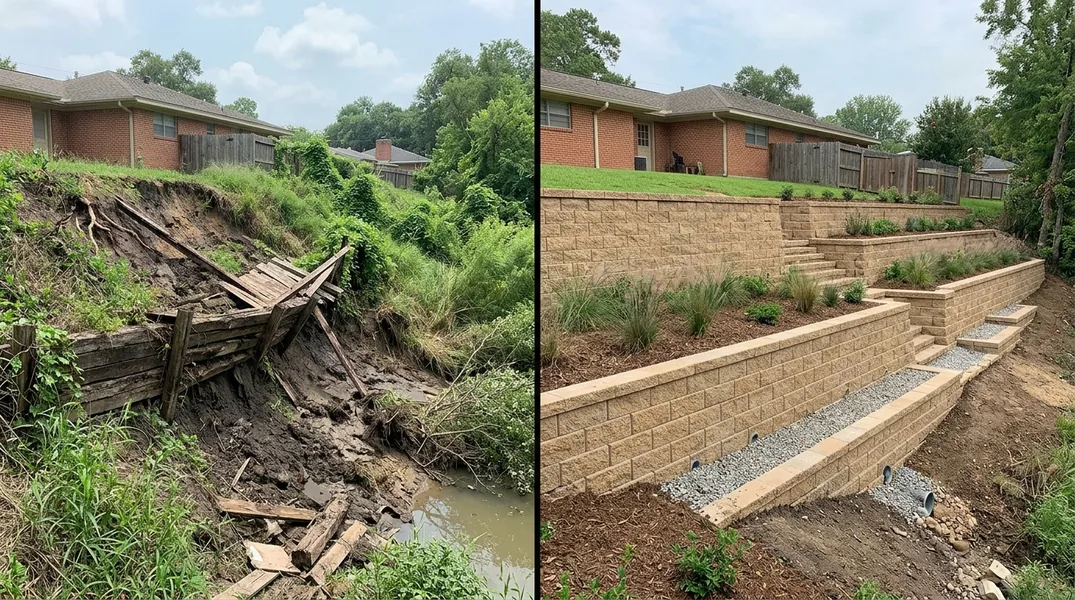
Understanding Gumbo Clay and Why It Destroys Retaining Walls
If you own property in Houston, you've likely heard about gumbo clay. This heavy, expansive soil is one of the most challenging materials for any retaining wall to handle. Unlike sandy or well-draining soils found in other parts of the country, gumbo clay expands when wet and contracts when dry, creating constant pressure against your wall structure.
Gumbo clay is composed primarily of montmorillonite, a mineral that absorbs water like a sponge. During Houston's rainy seasons, this soil can swell significantly, pushing against your retaining wall with tremendous force. When the weather dries out, the clay shrinks, creating voids and allowing water to penetrate deeper into the soil. This cycle of expansion and contraction happens repeatedly throughout the year, gradually weakening even well-constructed walls. Over time, this movement causes structural stress that no wall can indefinitely withstand without proper design and drainage solutions.
Common Warning Signs of a Failing Retaining Wall
Spotting the early signs of wall failure can save you thousands in Retaining Wall Repair costs. A leaning retaining wall is one of the most obvious indicators that something has gone wrong. If your wall is tilting away from the retained soil or leaning inward toward your property, the soil pressure has overcome the wall's structural capacity. This tilt typically worsens over time and should never be ignored.
Horizontal cracks running across the face of your wall are another critical warning sign. These cracks indicate that the wall is being pushed by soil pressure and is beginning to fail under stress. Vertical cracks are less immediately concerning but still warrant attention. You might also notice that the top of your wall is moving away from the soil it's supposed to hold back, creating gaps or separation. Water seeping through the wall, staining, or efflorescence (white mineral deposits) suggest that drainage is failing, which accelerates deterioration. A bowing retaining wall that bulges outward in the middle is a sign of severe pressure buildup and requires urgent professional attention.
Why Traditional Retaining Wall Installation Fails in Gumbo Clay
Retaining Wall Installation in gumbo clay soil requires much more than simply stacking blocks or pouring concrete. Many homeowners and contractors make the mistake of treating gumbo clay like any other soil type. Without proper drainage systems, adequate wall height-to-thickness ratios, and appropriate foundation depth, even a brand-new wall will eventually fail. The expansive nature of gumbo clay demands specialized engineering and construction techniques that go beyond standard practices.
One major reason for failure is inadequate drainage behind the wall. When water accumulates in the soil behind a retaining wall, the hydrostatic pressure increases exponentially. In gumbo clay, this trapped water is absorbed into the soil matrix, causing expansion that pushes against the wall with tremendous force. Without a proper drainage layer, perforated drain pipe, and a way for water to exit the system, failure is almost inevitable. Additionally, many walls are built without sufficient compaction of the backfill material or without proper gravel base layers that allow water movement. The combination of poor drainage and expansive soil creates a perfect storm for structural failure.
Drainage Solutions That Actually Work for Houston Gumbo Clay
The most effective defense against gumbo clay failure is a comprehensive drainage system installed during the initial Retaining Wall Installation. A quality retaining wall should include a perforated drain pipe positioned behind the wall, typically at the base or slightly above grade. This pipe collects water that percolates through the soil and directs it away from the wall structure. Behind the drain pipe, a layer of coarse gravel or drainage stone allows water to flow freely toward the pipe rather than accumulating against the wall.
Proper backfill material is equally important. Rather than using native gumbo clay as backfill, the area behind the wall should be filled with a free-draining material such as gravel or recycled asphalt. This allows water to pass through quickly rather than being absorbed and causing expansion. Many homeowners don't realize that the backfill material makes as much difference as the wall itself. Additionally, surface water management is critical. Grading the ground away from the top of the wall, installing gutters to direct roof water away from the property, and ensuring that landscaping irrigation doesn't saturate the soil behind the wall all contribute to long-term wall stability.
When You Need Professional Retaining Wall Repair Near Me
If you've already noticed signs of failure in your existing retaining wall, waiting will only make the problem worse and more expensive to fix. A failing retaining wall doesn't repair itself, and the structural issues will continue to deteriorate with each weather cycle. Professional assessment is the first step. An experienced contractor can determine whether your wall can be repaired or if Retaining Wall Replacement is necessary.
Some repairs involve installing additional drainage systems or reinforcement, while others require partial or complete rebuilding. Concrete Retaining Walls may be reinforced with helical anchors or tiebacks that prevent further movement. In other cases, the entire wall must be removed and rebuilt with proper engineering and drainage from the ground up. The longer you delay professional intervention, the greater the risk of sudden failure, which could damage your property or create safety hazards. If you're in Houston or surrounding areas like Sugar Land or Pearland, contact Houston Retaining Wall for a professional evaluation.
Protecting Your Investment: Prevention and Maintenance
The best approach to retaining wall problems is prevention. If you're planning new construction or landscape work that involves a retaining wall, invest in proper engineering and installation from the start. Specify that drainage systems be installed, that backfill materials meet drainage standards, and that the wall be designed with gumbo clay soil conditions in mind. The upfront cost of doing it right is far less than the expense of major repairs or replacement down the road. Request detailed pricing that includes all drainage components, not just the wall structure itself.
For existing walls, regular maintenance extends their lifespan significantly. Inspect your wall at least twice per year, particularly after heavy rains. Look for new cracks, changes in tilt, or water seepage. Keep vegetation clear from the base of the wall and ensure that gutters and downspouts direct water away from the structure. If you notice any of the warning signs discussed earlier, don't delay in getting a professional opinion. Houston Retaining Wall offers free inspections and can provide honest assessment of your wall's condition. Call us at (346) 258-3418 or contact us online for a free estimate today.
Looking for a professional retaining wall contractor in Houston? Houston Retaining Wall responds fast for all your retaining wall needs.
Get a Free QuoteOur services: Retaining Wall Installation · Retaining Wall Repair · Retaining Wall Replacement