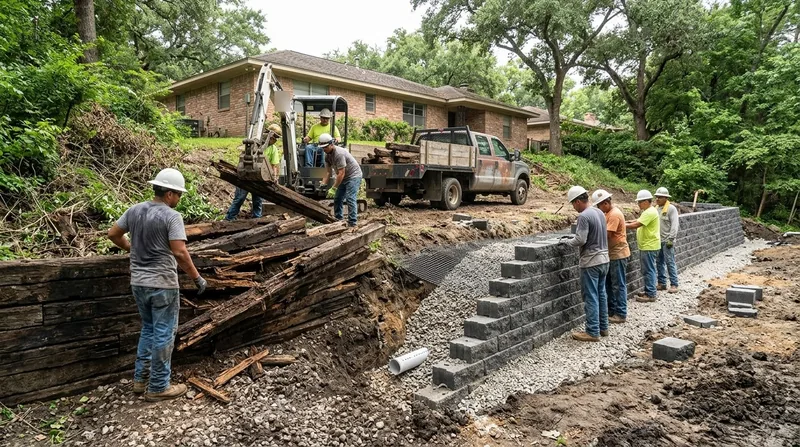




Retaining wall replacement in Houston is one of the most common structural fixes homeowners face, driven by the relentless pressure of black gumbo clay, seasonal ground movement, and the region's punishing rainfall. Unlike new installations, replacement means tearing out a failed wall, dealing with decades of settlement and water damage, and rebuilding with materials and drainage engineered for the Gulf Coast's wet, unstable soils. Whether your old poured concrete bayou wall is cracking and leaning, your railroad tie border has rotted into mulch, or your segmental block planter is tilting, replacement restores both function and curb appeal. This guide walks you through why replacement matters in Houston, how the work unfolds, what it costs, and how to hire the right contractor for the job. For related services, see our work on leaning and collapsed wall repair.
Why Retaining Wall Replacement Is Critical in Houston's Expansive Clay Environment
Houston's flat Gulf Coastal Plain sits on expansive black gumbo clay that swells when wet and shrinks when dry, creating cycles of heave and settlement that crack, tilt, and destabilize walls over 10 to 25 years. Add a high water table, poor drainage from clay-heavy soil, and the deluges from hurricanes and tropical storms, and you have a perfect recipe for wall failure. Most Houston walls were built before modern drainage standards, meaning water pools behind them, increases soil pressure, and accelerates failure. Replacing a wall is not cosmetic, it is structural necessity that protects your property line, landscape, and foundation.
- Remove the failed wall, haul away debris, and assess the footing and surrounding soil for subsidence or water damage.
- Install proper drainage behind the new wall to shed water and reduce hydrostatic pressure on the structure.
- Build a new wall using modern materials, correct setback, and engineered height suited to the soil and surcharge.
- Compact backfill in lifts and verify the wall is plumb and stable before finishing grade and landscape restoration.
These steps ensure your new wall stands for 30 to 50 years, not fail again in a decade.
Key info: Many Houston jurisdictions require a permit for walls taller than 4 feet measured from the footing, or when a wall supports a surcharge such as a driveway or structure. Engineered drawings may be required for tall or tiered walls. Always verify setback and property-line rules with your local building department before work begins, as thresholds vary by city.
For more detail on permitting and local requirements, consult the City of Houston Planning and Development Department.
How Retaining Wall Replacement Works in Houston: Our Step-by-Step Process
Replacement is a full demolition and rebuild. We start by inspecting the existing wall, identifying the failure mode, and planning drainage and material selection based on soil conditions and site access. In neighborhoods from the Heights to Pearland, we work around mature trees, established landscapes, and tight property lines. The process is methodical, messy, and requires proper equipment and disposal to protect your yard and adjacent properties.
- Inspect the wall, take measurements and photos, and identify the cause of failure, such as soil heave, water saturation, or material rot.
- Obtain any required permits from the local building department and confirm property-line and setback compliance.
- Demolish the old wall, break up and haul away concrete, block, timber, or stone, and clear the site to the footing.
- Excavate behind the wall to expose poor soil, install perforated drain tile and gravel, and prepare the footing trench.
- Build the new wall to the correct height and setback, using engineered materials such as poured concrete, segmental block, or natural stone.
- Backfill and compact in 6-inch lifts, install surface drainage if needed, and restore grade and landscape.
From demolition to final grading, most Houston jobs take 3 to 7 days, depending on wall length, height, and site access.
Local example: A 40-foot poured concrete wall in Sugar Land that was cracked and leaning due to black gumbo clay heave took 5 days to replace. We installed a new engineered concrete wall with a perforated drain and gravel backfill to shed water and prevent future movement. The homeowner recovered a level yard and peace of mind. See our drainage solutions page for more on preventing water-driven failure.
Retaining Wall Replacement Methods: Choosing the Right Material for Houston
The best material depends on soil type, wall height, budget, and aesthetics. In Houston, poured concrete and segmental block are the workhorses. Natural stone and timber are less common in new replacements but are still used for specialty walls and heritage properties. Each has tradeoffs in cost, durability, and maintenance.
| Approach | Description | Best for |
|---|---|---|
| Poured Concrete | Monolithic wall cast in place, reinforced with rebar, finished smooth or textured. Resists clay heave and water saturation when properly drained. | Bayou banks, tall walls, high-surcharge applications, long-term durability in wet soil. |
| Segmental Block (SRW) | Interlocking concrete or composite blocks stacked and backfilled, often with geogrid reinforcement. Flexible and easier to repair than poured concrete. | Residential yards, pool areas, raised beds, landscaping accents, walls under 8 feet. |
| Natural Stone (Limestone, Boulder) | Stacked or mortared stone, often limestone-faced. Attractive and durable but labor-intensive and more expensive. Requires proper drainage and a solid base. | Heritage properties, high-end residential, shorter walls, accent features in River Oaks and the Heights. |
| Timber and Railroad Tie | Pressure-treated lumber or reclaimed railroad ties, bolted or tiered. Aesthetic appeal but shorter lifespan in Houston's wet climate. Rot and insect damage common after 15-20 years. | Replacement of failed timber borders, rustic or cottage-style yards, where homeowner accepts higher maintenance and eventual replacement. |
Poured concrete is the most durable choice for Houston's clay soils and high water tables. Segmental block offers flexibility and ease of repair. Natural stone suits heritage properties but costs more. Timber walls are common replacements for failed old borders but have a shorter lifespan in our humid, wet climate.
Retaining Wall Replacement Cost in Houston: What to Expect
Retaining wall replacement in Houston typically starts at $35 per square foot for straightforward poured concrete or block walls, and ranges to $50 to $75 per square foot for engineered, tall, or complex jobs with difficult site access or premium materials such as natural stone. A 40-foot wall, 6 feet tall (240 square feet) might run $8,400 to $18,000 depending on material, drainage, and soil conditions. Factors that push cost up include tree roots, poor footing, high groundwater, tight access for equipment, tiered or curved design, and premium finishes.
Always get two to three written estimates that break down demolition, disposal, drainage, materials, labor, and any site-specific work. Avoid the lowest bid without understanding what is included. Proper drainage and compaction are not optional, they are the difference between a wall that lasts 30 years and one that fails in 10. Visit our pricing page for detailed cost scenarios and material comparisons.
Cost example: A 50-foot segmental block wall in The Woodlands, 5 feet tall, with new drainage and geogrid, ran $12,500. A 30-foot poured concrete bayou wall in Bellaire, 8 feet tall with engineered reinforcement and perimeter drainage, was $16,800. Prices reflect material, site difficulty, and local labor rates.
What to Look for When Hiring a Retaining Wall Contractor Near Me in Houston
Hiring the right contractor makes the difference between a wall that stands for decades and one that fails again. In Houston and surrounding cities like Conroe, Humble, and Katy, many contractors cut corners on drainage or use untested materials. Look for licensed, insured professionals who understand Gulf Coast soil, have references you can call, and will pull permits and follow local codes. Do not hire cash-only operators or contractors unwilling to provide written estimates and warranties.
- Request at least three references from recent wall replacements in your area, and call them to ask about drainage, durability, and cleanup.
- Confirm the contractor will obtain all required permits and coordinate with your local building department for inspections.
- Ask how the contractor handles drainage, compaction, and warranty, and get all terms in writing before work starts.
- Check that the contractor understands Houston's expansive clay, high water table, and hurricane-driven rainfall, and designs accordingly.
A reputable contractor will also respect HOA requirements, property-line setbacks, and easements, and will discuss scheduling to minimize disruption to your home and neighbors.
Ready to get started? Contact us for a free, no-obligation estimate. We serve Houston, Sugar Land, Pearland, League City, Baytown, Missouri City, Conroe, The Woodlands, Friendswood, Katy, Spring, Humble, Tomball, Bellaire, Atascocita, and Rosenberg. Call (346) 258-3418 today.
Retaining Wall Replacement in Houston: Pricing Guide
| Service | Price | Details |
|---|---|---|
| Poured Concrete Wall Replacement | Starting at $35/sq ft | Includes demolition, disposal, new drainage, concrete, rebar, and finish. Cost rises with wall height, footing depth, and clay removal. |
| Segmental Block (SRW) Wall Replacement | Starting at $40/sq ft | Includes demolition, disposal, block, geogrid, drainage gravel, and compaction. Material and labor are higher than concrete but offer design flexibility. |
| Natural Stone and Limestone Wall Replacement | Starting at $60/sq ft | Premium material, skilled masonry, drainage, and finish. Most expensive option but highest aesthetic value for heritage and luxury properties. |
| Timber and Railroad Tie Wall Replacement | Starting at $25/sq ft | Lowest cost upfront but shorter lifespan in Houston humidity. Includes demolition, pressure-treated lumber or ties, bolts, and backfill. |
| Complex or Tall Wall (Engineered Design) | On estimate | Walls over 8 feet, tiered designs, surcharge applications, or poor soil require site visit, soil testing, and engineered plans before pricing. |
| Free Estimate and Consultation | No charge | Response within 24 hours at (346) 258-3418. Includes site visit, material options, timeline, and written quote with no obligation to hire. |
Indicative pricing, the exact cost depends on square footage, finish, and site access. Free personalized estimate within 24h at (346) 258-3418.


