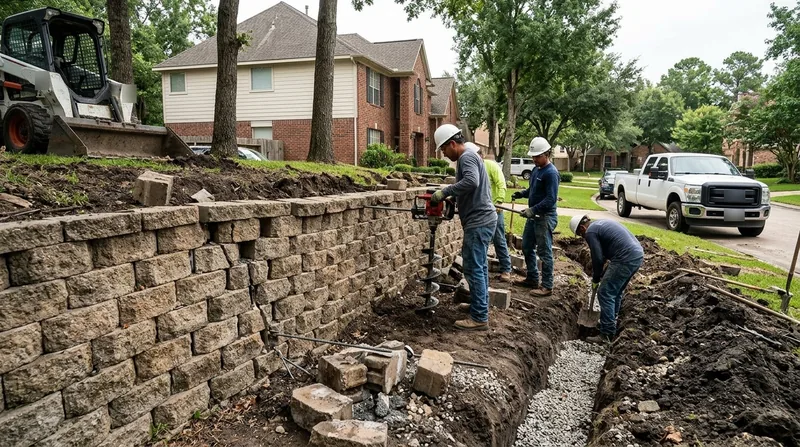




Retaining Wall Repair in Houston stops the damage before your wall fails completely. Houston's flat Gulf Coastal terrain, combined with expansive black gumbo clay, a high water table, and intense seasonal rainfall, creates perfect conditions for wall failure. Poured concrete bayou-bank walls, segmental block planters, and aging landscape timber borders lean, bow, and crack under soil pressure and water infiltration. When a wall begins to fail, the window to repair it is narrow, especially before the next tropical storm or heavy rain event. We stabilize failing walls with drainage correction, tieback anchors, partial rebuilds, and targeted reinforcement to restore structural integrity and protect your property.
Why Retaining Wall Repair Matters in Houston's Climate and Soil
Houston's homes sit on the flat Gulf Coastal Plain, where Buffalo, Brays, White Oak, and Greens bayous cut through wooded ravines and steep eroding banks. The soil here is dominated by expansive black gumbo clay that swells dramatically during wet seasons and shrinks during dry spells, placing constant lateral stress on retaining walls. Combined with a high water table, ground subsidence, and torrential hurricane and tropical storm rainfall, your retaining wall faces relentless pressure. A wall that shows early signs of failure, such as leaning, bowing, or horizontal cracking, will fail completely within months if left unrepaired, especially after the next major rain event.
- We identify the root cause of wall failure: drainage problems, inadequate footing depth, soil expansion, or lack of proper reinforcement.
- We install or upgrade drainage systems to redirect water away from the wall and reduce hydrostatic pressure behind it.
- We install tieback anchors or tension cables to pull a bowing wall back to vertical and stabilize it permanently.
- We rebuild the wall section by section when the damage is too severe for anchoring alone, using proper compaction and reinforcement standards.
- We verify compliance with local building department requirements, which vary by jurisdiction and wall height.
Early repair prevents catastrophic failure and protects your property, driveway, pool, or landscape investment from collapse.
Key info: Walls over approximately 4 feet measured from the footing, or walls that support a surcharge such as a driveway or structure, often require a building permit and possibly engineered drawings. Setback and property-line rules vary by municipality. Always check with your local building department before beginning repairs. For more on permitting requirements, consult the City of Houston Public Works or your neighborhood's jurisdiction office.
How We Repair Failing Retaining Walls in Houston: Our Process
Every retaining wall repair begins with a detailed on-site inspection to understand why the wall is failing. We assess soil conditions, drainage, wall composition, and the extent of structural damage. From there, we develop a repair strategy tailored to the specific failure mode and your budget. Our goal is to stop the failure and restore the wall to stable, vertical condition before the next weather event pushes it further.
- We perform a thorough site evaluation, measuring lean, photographing cracks, and probing soil behind the wall to identify drainage and compaction issues.
- We design a repair plan that addresses the root cause, whether that is poor drainage, inadequate reinforcement, or soil instability.
- We install or upgrade drainage systems, including perforated pipe, gravel backfill, and French drains to reduce water pressure behind the wall.
- We install tieback anchors, helical anchors, or soil nails to pull the wall back to plumb and lock it in place.
- We rebuild damaged sections of the wall using proper materials, compaction, and reinforcement to match or exceed the original design.
- We verify the repair meets local building code and document the work for your records and insurance.
The entire process is coordinated to minimize disruption to your yard and landscaping while ensuring a permanent fix.
Example: A homeowner in Bellaire noticed their 6-foot poured concrete wall leaning inward by 2 inches over the course of a single rainy season. Black gumbo clay behind the wall had swelled, and no drainage system existed to relieve the hydrostatic pressure. We installed a perforated drainage pipe along the base, backfilled with gravel, and installed three tieback anchors spaced 8 feet apart. The wall returned to vertical within days, and the new drainage system prevents future movement. Total repair took 3 working days.
Retaining Wall Repair Methods and Materials
Different failure modes call for different repair approaches. A wall that is leaning but structurally sound may need only drainage and anchoring. A wall with significant cracking, settling, or spalling may require partial or full reconstruction. We match the repair method to the specific problem and the wall's original construction.
| Repair Method | Description | Best For |
|---|---|---|
| Drainage Installation or Upgrade | Install perforated pipe, gravel backfill, and French drains to reduce hydrostatic pressure behind the wall. | Walls leaning or bowing due to water pressure, especially in Houston's high water table conditions. |
| Tieback Anchors or Helical Anchors | Install steel anchors or cables that pull a bowing wall back to vertical and lock it permanently into stable soil. | Walls with 1 to 3 inches of lean or bow that are otherwise structurally sound. |
| Partial Reconstruction | Rebuild the damaged section of the wall, replacing failed blocks, concrete, or timber with new material and proper compaction and reinforcement. | Walls with significant cracking, spalling, or settling that cannot be stabilized by anchoring alone. |
| Full Wall Replacement | Remove and rebuild the entire wall using engineered design, proper materials, and drainage to prevent future failure. | Walls that are severely damaged, settling unevenly, or at imminent risk of collapse. |
| Slope Stabilization and Erosion Control | Stabilize the slope above or below the wall with geotextile, erosion control matting, or revegetation to prevent further soil loss and pressure. | Walls on or near slopes, particularly along bayou banks or wooded ravines where soil erosion is active. |
Each method is chosen based on the wall's material, the severity of the damage, and the underlying cause of failure. We also offer retaining wall drainage services as a standalone solution when poor drainage is the primary issue.
Retaining Wall Repair Cost in Houston: What to Expect
The cost of retaining wall repair in Houston depends on the size of the wall, the extent of damage, the repair method needed, and site access. A simple drainage upgrade for a small wall may start at $1,500 to $3,000, while anchoring a 20-foot bowing wall can range from $4,000 to $8,000. Partial or full reconstruction typically runs $8,000 to $20,000 or more, depending on wall height, length, and material. Emergency repairs after a storm or failure may incur a rush fee.
The main factors that affect repair cost are wall height and length, the number and type of anchors or reinforcement needed, whether drainage installation or upgrade is required, site access and soil conditions, and whether the repair requires an engineered design and building permit. Getting two to three estimates from licensed contractors is essential, as repair strategies can vary significantly based on experience and site assessment. Visit our pricing page for more detailed breakdowns of common repair scenarios.
We recommend scheduling your free estimate as soon as you notice a wall leaning, bowing, or cracking. Early intervention is almost always less expensive than waiting for catastrophic failure, which may require emergency demolition and full reconstruction.
What to Look for When Hiring a Retaining Wall Contractor Near Me in Houston
Choosing the right contractor for retaining wall repair is critical. Your wall is a structural element that protects your property, so you need someone with real expertise in Houston's soil, climate, and building codes. Start by verifying that the contractor is licensed and insured for the work. Check references from recent repair jobs in Houston, Sugar Land, Pearland, or other areas where you can verify the quality of their work.
Request detailed written estimates from at least two contractors. A good estimate should break down the repair method, materials, labor, and timeline, and should address the specific failure mode your wall is experiencing. Avoid contractors who give vague estimates or who push you to rush into a decision. Understand whether your repair will require a building permit and engineered drawings, and confirm that your contractor will handle permitting and code compliance. If your home is in an HOA community, check whether the HOA has approval requirements for retaining wall work, and ask your contractor if they have experience coordinating with HOA boards.
Finally, ask about warranty coverage on the repair work and ongoing maintenance recommendations. A reputable contractor will stand behind their work and provide guidance on drainage maintenance and monitoring to prevent future failure. Contact us for a free, no-obligation estimate and to discuss your specific repair needs.
Retaining Wall Repair in Houston: Pricing Guide
| Service | Price | Details |
|---|---|---|
| Drainage Installation or Upgrade | Starting at $1,500 | Perforated pipe, gravel backfill, and French drain installation to reduce hydrostatic pressure behind the wall |
| Tieback or Helical Anchors | Starting at $2,500 | Installation of one to three anchors to pull a bowing wall back to vertical and stabilize it permanently |
| Partial Wall Reconstruction | Starting at $5,000 | Rebuild of damaged wall section, including removal, material replacement, compaction, and proper reinforcement installation |
| Full Wall Replacement | On estimate | Complete removal and rebuild of entire wall with engineered design, materials, and drainage system to prevent future failure |
| Emergency or Rush Repair | Starting at $3,000 | Same-day or next-day response to acute wall failure or imminent collapse, with additional mobilization and coordination fees |
| Estimate | Free | On-site inspection, assessment of failure mode, repair recommendation, and written estimate within 24 hours at (346) 258-3418 |
Indicative pricing, the exact cost depends on square footage, finish, and site access. Free personalized estimate within 24h at (346) 258-3418.


