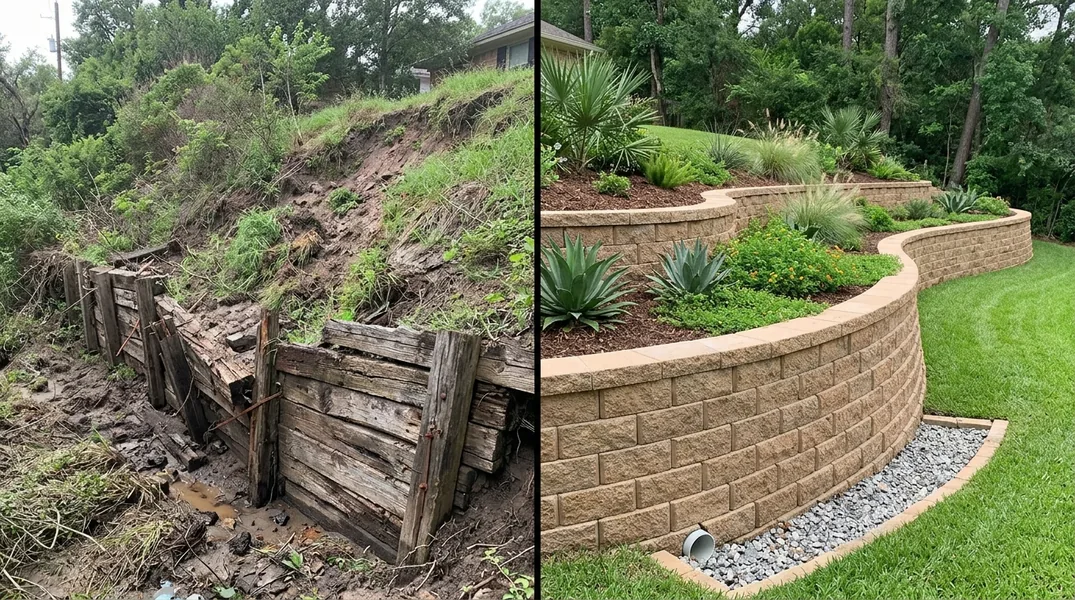
Signs Your Retaining Wall Is in Trouble
If you've noticed your retaining wall starting to lean, tilt, or bow outward, you're not alone. Many homeowners in Houston face this problem due to our region's heavy rainfall, clay-heavy soil, and temperature fluctuations. A leaning retaining wall is more than just an eyesore; it's a structural warning sign that demands attention before the situation worsens.
The most obvious indicator is visible tilting or bowing of the wall itself. You might also notice retaining wall crack repair needs when horizontal or vertical cracks appear in the surface, water seeping through the wall, soil erosion at the base, or plants and trees uprooted near the wall's foundation. In some cases, homeowners report that the wall has moved several inches over a season or two. These signs suggest that the wall's structural integrity has been compromised and that hydrostatic pressure, poor drainage, or soil movement is at play.
Understanding Why Retaining Walls Lean in Houston
The Houston climate and soil conditions create a perfect storm for retaining wall problems. Our area experiences heavy rainfall, particularly during hurricane season and spring months, which increases hydrostatic pressure behind the wall. When water accumulates behind a retaining wall without proper drainage, it pushes against the structure with tremendous force, causing it to lean or fail over time.
Additionally, Houston's clay-based soil expands when wet and contracts when dry, a cycle that stresses the wall's foundation and causes shifting. Poor initial installation, inadequate drainage systems, or walls built without proper reinforcement are also common culprits. If your wall was installed incorrectly or without considering soil conditions, it's more likely to develop problems. The good news is that understanding the root cause helps determine whether Retaining Wall Repair will solve the issue or if Retaining Wall Replacement is necessary.
Repair vs. Replace: How to Decide
The decision between repair and replacement depends on several factors, including the severity of the lean, the wall's age, the underlying cause, and your budget. If your wall is leaning slightly and the problem is recent, repair might be sufficient. Retaining Wall Repair can include installing proper drainage systems, adding reinforcement, or injecting stabilizing materials. These solutions work best when the structural damage is localized and the foundation remains sound.
However, if the wall has leaned significantly, is severely cracked, or has moved more than a few inches, replacement is often the safer and more cost-effective long-term solution. A wall that's already compromised may continue to deteriorate despite repairs, leading to repeated expenses and potential safety hazards. If the wall is older than 20 to 30 years, or if the lean is caused by fundamental design flaws, replacement ensures you'll have a properly engineered structure built to withstand Houston's unique environmental challenges. A professional inspection can help you understand which option makes sense for your specific situation.
The Repair Process for Minor Leaning Walls
If your retaining wall is only slightly leaning and the damage is minimal, repair might restore its functionality and appearance. The repair process typically begins with a thorough inspection to identify the root cause, whether that's poor drainage, soil erosion, or minor foundation settling. Once the cause is identified, professionals can install or improve drainage systems, add geotextiles to stabilize soil, or reinforce the wall with additional anchors or tie-backs.
For Concrete Retaining Walls, crack repair may involve epoxy injection, patching, or waterproofing treatments to prevent water infiltration. Repairs generally take a few days to a couple of weeks, depending on complexity, and they cost significantly less than full replacement. However, repairs are only a viable option when the wall's foundation is still solid and the lean hasn't compromised the overall structural integrity. If you're unsure whether your wall qualifies for repair, Houston Retaining Wall can provide a professional assessment.
When Replacement Is the Better Choice
Retaining Wall Replacement becomes necessary when the wall has sustained significant damage, is leaning more than a few inches, or when repairs would be temporary fixes to a fundamentally flawed structure. Replacement ensures that your new wall is engineered to handle Houston's soil and climate conditions, includes proper drainage and reinforcement, and meets current building codes. A new wall will also give you peace of mind, knowing it's built to last for decades.
The replacement process involves removing the old wall, preparing the foundation, and installing a new structure with modern materials and techniques. Retaining Wall Installation for replacement typically takes one to three weeks, depending on the wall's size and complexity. While replacement requires a larger upfront investment than repair, it eliminates the risk of recurring problems and protects your property's integrity. In many cases, homeowners find that replacement is more economical over the long term than repeatedly repairing a failing wall.
Retaining Wall Repair and Replacement Cost in Houston: What to Budget
The cost of addressing a leaning retaining wall varies widely depending on whether you choose repair or replacement, the wall's size, materials, and the underlying problem. Minor repairs might cost between $500 and $2,500, while more extensive repairs could run $3,000 to $8,000. Retaining Wall Replacement typically ranges from $3,000 to $15,000 or more, depending on the wall's length, height, and material choice. Concrete walls, for example, cost more upfront but offer durability and longevity.
To get an accurate understanding of what your project will cost, it's essential to obtain a free estimate from a qualified contractor who understands Houston's specific conditions. Houston Retaining Wall offers transparent pricing and detailed estimates so you can make an informed decision. We recommend getting multiple quotes and asking contractors about warranty coverage, materials, and the expected lifespan of their work. Investing in quality installation or repair now prevents costly emergency repairs or property damage later.
Why Professional Inspection Matters
Attempting to diagnose or repair a leaning retaining wall on your own can be dangerous and ineffective. A professional inspection identifies the root cause of the lean, assesses the extent of structural damage, and recommends the most appropriate solution. Professionals use their experience to spot issues that homeowners might miss, such as internal soil erosion, hidden cracks, or inadequate drainage that's causing hydrostatic pressure.
Houston Retaining Wall's team has years of experience working with leaning and damaged walls throughout the region. We understand how Houston's climate, soil composition, and building codes affect retaining wall performance. Whether your wall needs minor repairs or complete replacement, a professional assessment ensures you make the right choice for your property and budget. If you're concerned about a leaning wall, call us today at (346) 258-3418 to schedule your inspection and receive expert guidance tailored to your situation.
Looking for a professional retaining wall contractor in Houston? Houston Retaining Wall responds fast for all your retaining wall needs.
Get a Free QuoteOur services: Retaining Wall Installation · Retaining Wall Repair · Retaining Wall Replacement